
People will develop cancer, according to the Japan statistics cited on SONIRE’s current site.
SONIRE Therapeutics
Focused sound.A new path forcancer care.
Next-generation ultrasound-guided HIFU therapy, developed from more than a decade of academic research and clinical know-how.
Explore the technology
Sound can reach
where hands cannot.HIFU / Oncology
Palo Alto + Tokyo
where hands cannot.HIFU / Oncology
Palo Alto + Tokyo
FDA Breakthrough Device DesignationSUNRISE-I randomized studySUNRISE-II U.S. feasibility studyUltrasound-guided HIFUCavitation visualizationRobot-assisted positioningFDA Breakthrough Device DesignationSUNRISE-I randomized studySUNRISE-II U.S. feasibility studyUltrasound-guided HIFUCavitation visualizationRobot-assisted positioning
The mission
Sonics brings a hopeful new future to cancer patients and their families.
SONIRE is developing an ultrasound-guided high-intensity focused ultrasound system as a new treatment modality for difficult-to-treat cancers, with pancreatic cancer as its first target.
From image to focus
A treatment idea you can see.
Ultrasound first shows the anatomy. Focused acoustic energy then converges on a defined region. SONIRE’s technology story becomes much clearer when the interface visually follows that same path.
01Image02Focus03Treat
Why pancreatic cancer
A difficult cancer needs more options.
The current SONIRE site frames pancreatic cancer as a first target because treatment options remain limited. Rather than burying that context in a long report, the key idea is surfaced in a compact visual sequence.
Men, cancer development rate shown on SONIRE’s current site.
Women, cancer development rate shown on the current site.
Pancreatic cancer survival figure referenced in SONIRE’s existing concept section.
Existing SONIRE visualFive-year relative survival by cancer stage.The current-site chart is retained as supporting context instead of replacing it with a generic infographic.
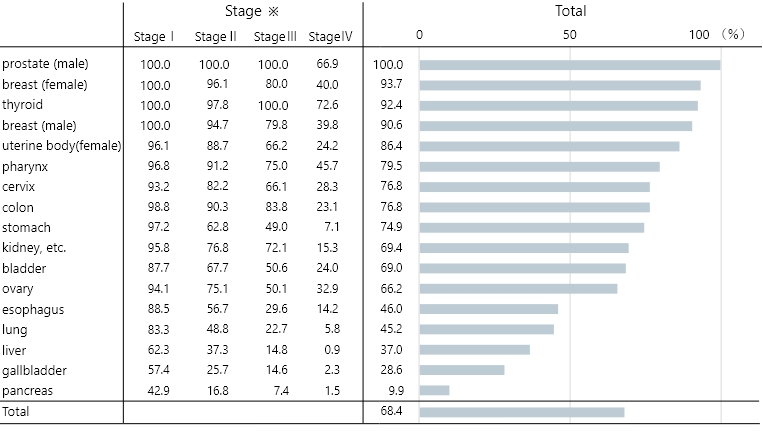
Figures above are carried over from the National Cancer Center Japan sources cited by SONIRE’s current website.
How HIFU works
Energy converges at one focal region.
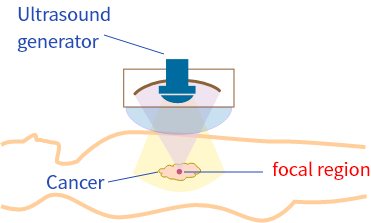
Ultrasound waves generated outside the body are focused on a target area. Energy absorbed at the focal region is converted into heat, creating localized tissue heating and necrosis.
See the full system01 / field of view
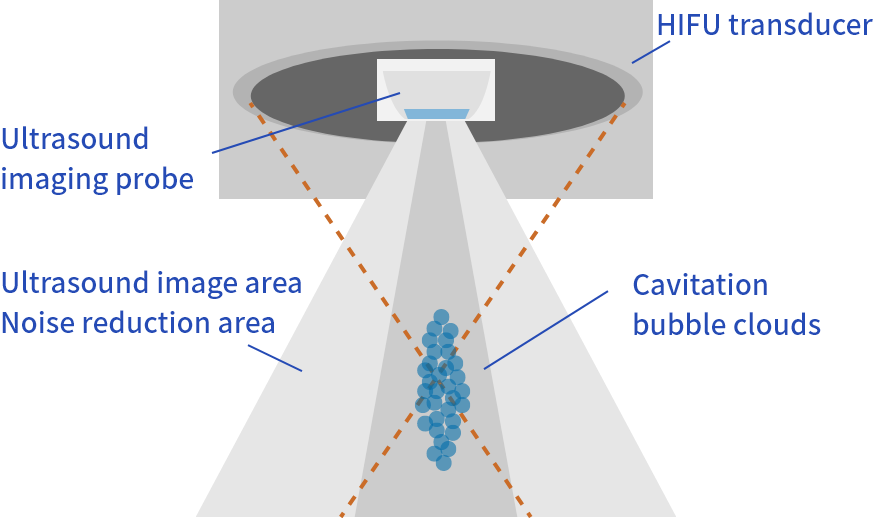
Reduce HIFU interference during treatment.
SONIRE describes a proprietary approach intended to secure the ultrasound guidance field while HIFU is being delivered.
02 / cavitation
Make the treatment area visible.
Cavitation bubbles generated by ultrasound pulses are used by SONIRE to help visualize the treatment area during ultrasound guidance.
Cavitation field / animated study
03 / heating
Use cavitation to enhance energy absorption.
SONIRE’s published technology story describes cavitation bubbles as a way to enhance ultrasound energy absorption and heating efficiency.
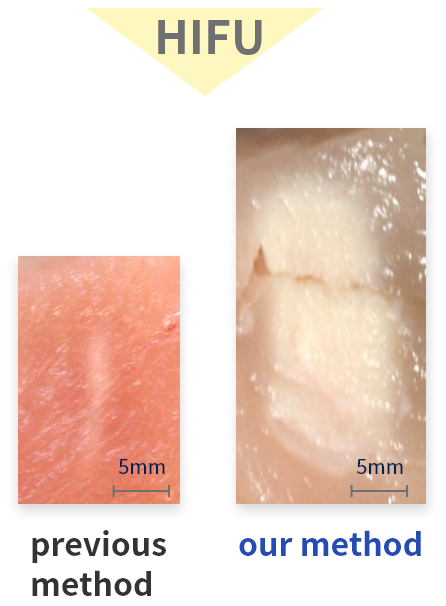
04 / irradiation
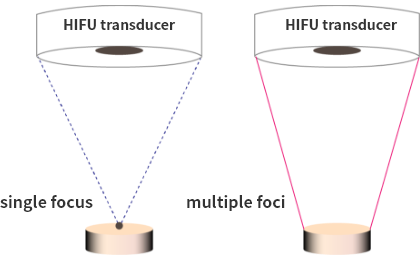
Move from a single focus to multiple foci.
Multi-channel, multi-point irradiation is designed to increase treatment efficiency and reduce treatment time.
05 / robotics
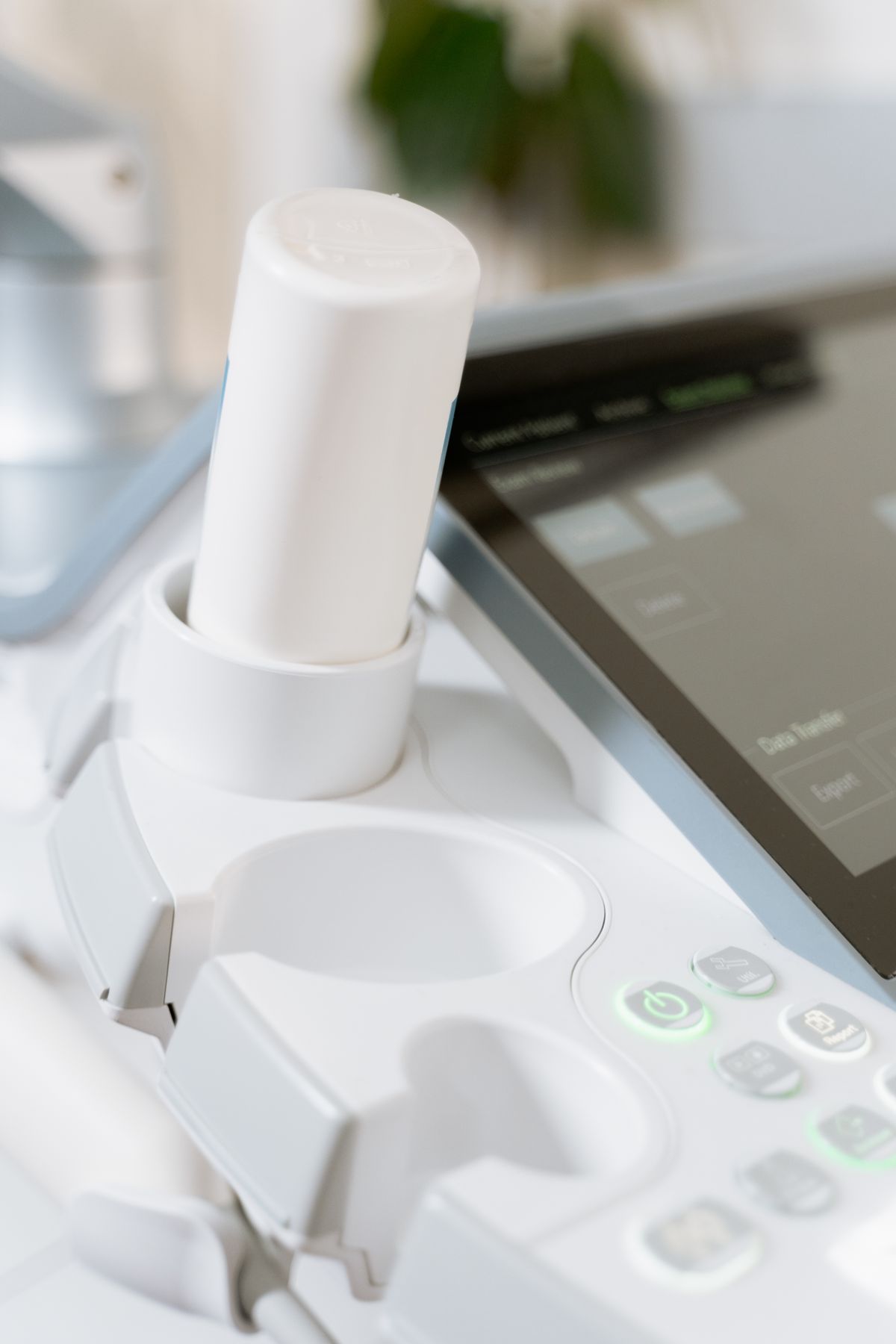
Precise positioning, without making operation feel robotic.
SONIRE’s robot guidance system combines millimeter-scale precision drive with an intuitive manual positioning mode.
Platform
Suizenji, built around real-time guidance.
SONIRE’s public materials describe a system combining real-time ultrasound guidance, a proprietary irradiation method, cavitation visualization, multi-focus scanning and robot-assisted positioning.
SONIRE Suizenji
Official film
One minute to understand the ambition.
SONIRE produced an official one-minute video for the MedTech Innovator competition. The new site gives that media a real stage instead of letting video disappear inside a dense technology page.
SONIRE / MedTech Innovator
See focused ultrasound in motion.
Research collaborators
Rooted in academic engineering and medicine.
SONIRE’s technology grew from research and clinical know-how developed through Japanese academic institutions. Those relationships deserve visible credibility on the site.




Clinical momentum
Japan evidence. U.S. expansion.
SUNRISE-I, FDA Breakthrough Device Designation, a Palo Alto presence and SUNRISE-II now form a much clearer clinical-stage story than the original site communicates at first glance.
Grant
$13 million NEDO support announced for global commercialization of the HIFU platform.
ClinicalSONIRE initiates its first U.S. clinical study, SUNRISE-II.
Financing$18 million Series A supports clinical development and U.S. regulatory progress.
FDASuizenji receives FDA Breakthrough Device Designation for pancreatic cancer.
SONIRE Therapeutics
From acoustic engineering to a new therapeutic future.
Explore the clinical program, company story and the people advancing SONIRE’s focused-ultrasound platform.